Massachusetts Lawmakers Expand the Move-Over Law, Await Signature

Massachusetts lawmakers have sent Gov. Maura Healey a bill that would expand the state's move-over law to utility trucks and disabled vehicles and raise the fines for motorists who fail to slow down or change lanes.
Get Big Rig Daily every morning
The trucking stories drivers are talking about, in one short email. Unsubscribe any time.
After you sign up, check your inbox for an email from news@bigrigdaily.com and tap the button to confirm.
Quick answer
The Senate and House enacted S.2653, "An Act updating the Move Over Law," on Nov. 23, 2026, and laid it before the governor, according to the official bill history. A legislative press release the same day said the bill extends existing protections for emergency vehicles, road crews and tow trucks so they also cover utility trucks and stranded motorists on a shoulder or breakdown lane. NBC Boston quoted Healey as saying, "I've advocated for that for a long time, so I'm glad it got to my desk. I'll be signing it." As of early Nov. 25, 2026, the bill page still listed the last action as enacted and laid before the governor. This article does not treat the measure as signed.
What would change
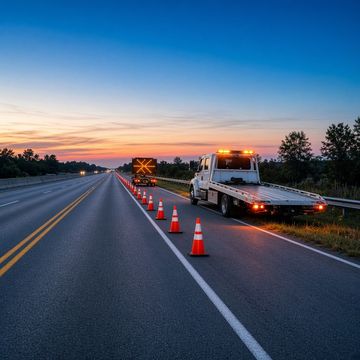
A Massachusetts Legislature press release says motorists would be required to slow down when approaching a utility truck or a disabled vehicle, and, on a multi-lane highway, to change lanes when passing if it is safe to do so. The current law already applies to first responders and others working beside the road; the expansion is aimed at utility work and stalled vehicles.
Get Big Rig Daily every morning
The trucking stories drivers are talking about, in one short email. Unsubscribe any time.
After you sign up, check your inbox for an email from news@bigrigdaily.com and tap the button to confirm.
The Legislature's release does not define 'disabled vehicle' or 'utility vehicle.' The text of the final agreement is in the further Senate amendment, S.3305, which Big Rig Daily could not open in full, so readers should check the enacted text for the exact definitions and for what counts as a repeat offense.
The new fines
Under the legislation, an existing $100 fine would increase to $200 for a first offense, $400 for a second offense and $1,000 for a third or subsequent violation, the legislative release says. The release says repeat offenders who injure another person would pay a $2,500 fine. That figure is tied to a repeat offense that injures someone, not to every injury case.
The bill would also require an education program for motorists who commit a second or subsequent violation, and it directs the Registry of Motor Vehicles to create a public awareness campaign on distracted driving, the release says.
How the bill got to Healey's desk
Prior versions passed the Senate and House before a final agreement was reached. The Senate adopted the final agreement on Nov. 19, 2026, and the House adopted the amendment on Nov. 23, the release says. Both branches then enacted the bill and sent it to the governor.
Status as of Nov. 25
The official bill history had not recorded a signature or veto when this article was prepared early on Nov. 25. Healey's comment to NBC Boston is a statement of intent, not a signed bill.
For a recent crash story involving a shoulder stop and move-over questions, see the Oklahoma I-35 account from Marietta. State-by-state trucking rules are also collected in the truck laws by state guide.
How should states treat motorists who pass too close to a stopped vehicle on the shoulder?
Save this story for later

Sources
- Massachusetts Legislature press release: Legislature Agrees on Highway Safety Expansion for Utility Workers and Drivers (Nov. 23, 2026)
- Bill S.2653, 194th General Court: An Act updating the Move Over Law
- NBC Boston (tip, Healey comment): Massachusetts move-over law expansion approved by Legislature, awaits governor's signature
Get Big Rig Daily every morning
The trucking stories drivers are talking about, in one short email. Unsubscribe any time.
After you sign up, check your inbox for an email from news@bigrigdaily.com and tap the button to confirm.
Related stories