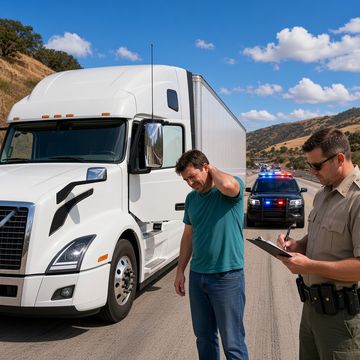
Truck Chain Laws by State: Rules, Fines and Chain Up Tips

Get Big Rig Daily every morning
The trucking stories drivers are talking about, in one short email. Unsubscribe any time.
Truckers do not need tire chains in every state. Chain and traction rules are state laws, mostly in western mountain states, and most apply only when chain controls are posted. Colorado, Washington and Montana also set carry seasons when certain trucks must carry chains or traction devices on listed routes. Verified rules are below for California, Colorado, Washington, Montana, Oregon, Nevada, Wyoming, Idaho, Utah, Vermont, South Dakota, Georgia and Pennsylvania, plus the states where no requirement was found.
The full state reference is on the truck laws by state page. This guide is general information, not legal advice. Check the posted signs before every winter trip.
Get Big Rig Daily every morning
The trucking stories drivers are talking about, in one short email. Unsubscribe any time.
How chain and traction laws work for truckers
There are three main kinds of rules:
- Posted controls: most state chain laws apply only when signs say chains or traction devices are required. Vehicles covered by the state's rule must then chain up to keep going.
- Carry seasons: Colorado, Washington and Montana require certain trucks to carry chains or traction devices during set dates on listed mountain routes, even when no controls are posted.
- Emergency or event rules: Georgia and Pennsylvania restrict trucks only during a declared winter emergency or a winter weather event.
Under 49 CFR 392.14, "Extreme caution" is required when snow, ice or other hazards affect visibility or traction, and operation "shall be discontinued" if conditions become sufficiently dangerous. Bad weather can also add up to two hours of driving under the adverse driving conditions exception in 49 CFR 395.1(b)(1). See the ELD and hours of service rules explained and the hours of service break calculator.
States with truck chain laws
These rules were checked against official sources on Oct 25, 2026. Earlier open questions on Alaska, Montana, Oklahoma, Pennsylvania, Utah and Oregon's carry rule are resolved below. Only Alabama, Arkansas, Mississippi, New Jersey, New Mexico and Tennessee remain unverified, because only unofficial copies of their laws could be read.
At a glance:
- Carry season: Colorado (Sep 1 to May 31, listed corridors), Washington (Nov 1 to Apr 1, listed routes) and Montana (Oct 1 to Apr 30, mountain passes and designated stretches)
- Chains when signs are posted or conditions require them: California, Nevada, Oregon (including carry chains signs), Wyoming, Idaho (named passes), Vermont, Utah and South Dakota. Colorado and Washington also have posted chain laws.
- Declared winter emergency or winter event: Georgia and Pennsylvania
- No state requirement found, chains permitted (some with limits): Arizona, Alaska, Oklahoma and the other states listed below
California chain law for trucks
Caltrans says California "does not have any specific dates when vehicles are required to carry chains." When the road is posted with a sign requiring chains, "all heavy-duty vehicles (over 6,500 pounds gross weight) must be equipped with chains mounted on the tires in order to proceed."
Which tires, from the Caltrans chain requirements chart:
- Single drive axle tractor and semi-trailer: "Drive axle must be chained."
- Tandem drive (type 3-S-2): "Both axles must be chained (four wheels with chains or ATD). Chains required on inside dual (if possible)."
- Trailer: "On any semi-trailer, only one set of chains is required regardless of number of axles."
- Super singles: chains are required on all drive wheels.
- Caltrans and CHP may require chains on all drive wheels if conditions warrant.
Caltrans says the speed limit when chains are required is 25 or 30 miles an hour. For stops, see the California truck stop and weigh station map.
Full entry: California truck laws.
Colorado chain law for trucks
Colorado's Senate Bill 24-100, in effect since Aug 7, 2024, expanded its carry law. According to the Colorado State Patrol, "annually, from September 1 to May 31, all commercial motor vehicles (CMVs) over 16,000 pounds must carry four snow chains or adequate alternate traction devices." The rule covers I-70 west of Morrison and six other mountain highways. CDOT Freight lists the corridors:
- I-70 west of MP 259 (Morrison)
- CO-9 from MP 63 to 97 (Frisco to Fairplay)
- US 40 west of MP 256 (Empire)
- US 50 west of MP 225 (Salida)
- US 160 west of MP 304 (Walsenburg)
- US 285 west of MP 250 (Morrison)
- US 550 from MP 0 to 130
When the commercial vehicle chain law is active, CDOT Freight says trucks need "chains or approved alternate traction devices (ATDs) on at least four of the drive wheel tires, or all of the drive wheel tires if the vehicle has fewer than four drive wheel tires." Fines can reach up to $500, or $1,000 if a truck is stuck and blocking the road, plus surcharges, according to the Colorado State Patrol and CDOT. See the Colorado truck stop and weigh station map.
Full entry: Colorado truck laws.
Washington chain law for trucks
Under WAC 204-24-050, vehicles over 10,000 pounds GVWR "must carry sufficient tire chains" from Nov 1 to Apr 1 each year on designated mountain routes, not statewide. There is a local delivery exemption. The listed routes are:
- I-90 North Bend to Ellensburg, I-82 Ellensburg to Selah, SR-2 Dryden to Index and SR-12 Packwood to Naches
- SR-14, SR-20, SR-97, SR-155, SR-410, SR-542 and SR-970 segments
The same rule says a 5-axle tractor with tandem drive and a tandem semi-trailer must chain "a minimum of four tires on the drive axles," plus one tire on either of the trailer's last two axles. All vehicles over 10,000 pounds GVWR "must carry a minimum of two extra chains," and "Plastic chains will not be allowed." See the Washington truck stop and weigh station map.
Full entry: Washington truck laws.
Montana chain law for trucks
Under MCA 61-9-436, from Oct 1 to Apr 30, a motor truck of 26,001 GVW or more towing a trailer must "carry in the vehicle approved traction control devices" on a mountain pass or a similar stretch of highway designated by the Montana Department of Transportation. It is a carry rule, and four wheel drive vehicles are exempt. The fine is "$225 for a first offense and not less than $225 or more than $500 for subsequent offenses." Montana law also permits chains when required for safety (MCA 61-9-406).
Full entry: Montana truck laws.
Oregon chain law for trucks
Oregon's chain law "applies to all highways throughout the state," according to ODOT's TripCheck. When chains are required, "You must use chains if your vehicle is towing or rated more than 10,000 pounds gross vehicle weight (GVW)." When carry chains signs are posted, those vehicles must carry chains, and traction tires do not substitute. There is no carry season. ORS 815.140 makes it an offense to drive on a highway posted for traction tires or chains without them. It is a Class C traffic violation. For vehicles registered under ORS chapter 826 (commercial and prorated vehicles): "The presumptive fine for failure to use vehicle traction tires or chains is $880." See the Oregon truck stop and weigh station map.
Full entry: Oregon truck laws.
Nevada chain law for trucks
Under NRS 484D.520, when chains are posted, a vehicle over 10,000 pounds must have tire chains. NRS 484D.525 puts them on at least two driving wheels, plus two braking wheels of any trailer that has brakes. Mechanical chain devices are allowed under NRS 484D.530 if the cross members cover at least 85 percent of the tire width, and only on drive axles. See the Nevada truck stop and weigh station map.
Full entry: Nevada truck laws.
Wyoming chain law for trucks
When WYDOT activates its Level 2 chain law, commercial vehicles must chain two drive wheels on the same axle. Wyoming Statute 31-5-956 says: "The operator of a commercial vehicle shall affix tire chains to at least two (2) of the drive wheels of the vehicle at opposite ends of the same drive axle." The penalty is not more than $250, or not more than $750 if the violation causes an incident that closes all lanes in one or both directions. The statute counts other traction devices that give traction equal to or better than metal chains. See the Wyoming truck stop and weigh station map.
Full entry: Wyoming truck laws.
Idaho chain law for trucks
Idaho Code 49-948 covers Lookout Pass and Fourth of July Pass on I-90 and Lolo Pass on SH-12. When the Idaho Transportation Department finds conditions unsafe, it "may establish requirements for the use of chains on all commercial vehicles." Studded tires are not allowed from May 1 to Sep 30. See the Idaho truck stop and weigh station map.
Full entry: Idaho truck laws.
Utah chain law for trucks
Under Utah Administrative Rule R920-6, when road conditions warrant, as determined by UDOT, the Utah Highway Patrol or a designated local police agency, vehicles over 12,000 GVW on Class I traction segments "shall be traction device equipped." On Class II segments, all vehicles must be traction device equipped or have four wheel drive. Traction device equipped means "traction devices on all drive tires," except that on dual tires, a device is required on at least one of the two tires in each dual mounting.
Full entry: Utah truck laws.
Vermont and South Dakota chain rules
- Vermont: when signs are posted, chain rules apply to vehicles "with a GVWR or a GCWR of more than 26,000 pounds." A single drive tractor with a semitrailer needs chains "on two tires on each side of the drive axle and on two tires, one on each side, of any axle of the semitrailer." The civil penalty is $1,000, or $2,000 if the violation substantially impedes traffic, and it doubles for a second conviction within three years (23 V.S.A. 1006c). Full entry: Vermont truck laws.
- South Dakota: the Secretary of Transportation may restrict travel on trunk highways to four wheel drive vehicles or vehicles with chains, studded tires or adequate snow tires, posted by signs. A violation is a Class 2 misdemeanor. There is no truck specific tire count (SDCL 32-19-3.1). Full entry: South Dakota truck laws.
Georgia and Pennsylvania winter emergency rules
During a declared winter state of emergency, on roads declared limited access, Georgia law requires commercial vehicles with four or more drive wheels to chain "each of the outermost drive wheel tires." Buses chain two. Causing a crash or blocking traffic without chains can bring a fine of up to $1,000 (O.C.G.A. 32-6-5). Full entry: Georgia truck laws.
During winter weather events, PennDOT can set tiered restrictions.
- Tier 1: bars "School buses, commercial buses and motor coaches without available chains or another approved Alternate Traction Device on board."
- Tier 2: bars "Tractors towing loaded tandem trailers unless there are chains or another approved Alternate Traction Device (ATD) on board."
- Tier 3: "no commercial vehicles are permitted EXCEPT loaded single trailers with chains or approved Alternate Traction Devices."
Full entry: Pennsylvania truck laws.
States with no chain requirement found
No state chain requirement was found in Arizona, Connecticut, Delaware, the District of Columbia, Florida, Hawaii, Illinois, Indiana, Iowa, Kansas, Kentucky, Louisiana, Maine, Maryland, Massachusetts, Michigan, Minnesota, Missouri, Nebraska, New Hampshire, New York, North Carolina, North Dakota, Ohio, Rhode Island, South Carolina, Texas, Virginia, West Virginia and Wisconsin. Some of these states limit when or where chains may be used; see the truck laws by state page for details. None was found in Alabama, Arkansas, Mississippi, New Jersey, New Mexico or Tennessee either, but only unofficial copies of their laws could be read.
Alaska has no chain mandate, but bans chains and studded tires on paved roads in summer (AS 28.35.155). Oklahoma has no chain requirement and permits chains only on vehicles rated up to 2 tons, from Nov 1 to Apr 1 (47 O.S. 12-405).
Chaining up a semi: where to stop, installers and speed
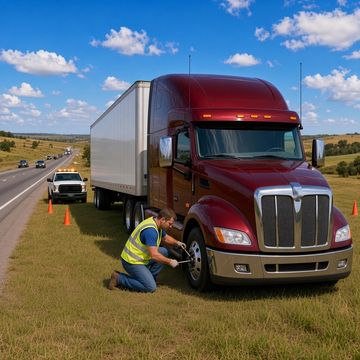
For official chain up tips, see CDOT Freight's chain up tips and WSDOT's tire chain installation page.
Where to chain up and take chains off
Caltrans says to "pull completely off the roadway to the right. Do not stop in a traffic lane." There is usually about a mile between "Chains Required" signs and the checkpoint. Remove chains after the "End of Chain Control" signs, at a pull-off.
Chain installers
In Washington, WSDOT says permitted chain installers "are not required to respond so all drivers should be able to install their own tire chains." For large trucks over 10,000 GVW, WSDOT lists installation at $25 per tire chained and removal at $5 per tire. Practice with your own chains before winter.
Driving on chains
California is the only state found with an official chained speed limit: 25 or 30 miles an hour. Elsewhere, obey posted limits.
Winter trip checklist for truckers
- Colorado, Sep 1 to May 31: four snow chains or adequate ATDs for trucks over 16,000 pounds on the listed corridors.
- Washington, Nov 1 to Apr 1: sufficient chains plus two extra for vehicles over 10,000 pounds GVWR on the listed routes, with no plastic chains.
- Montana, Oct 1 to Apr 30: approved traction devices for motor trucks of 26,001 GVW or more towing a trailer, on designated passes.
- Oregon, when carry chains signs are posted: chains for vehicles over 10,000 GVW or towing.
- Every route: chains that meet each state's tire rules for posted controls.
- Before leaving: run the pre-trip inspection checklist, check road conditions, and plan where to wait out a closure with truck parking tips and apps.
- If the truck slides off or gets stuck: find heavy-duty towing and mobile truck repair by state.
Check road conditions before you go
Official road condition sites:
- California: Caltrans QuickMap or 800-427-7623
- Colorado: COtrip
- Washington: WSDOT mountain passes
- Montana: 511MT
- Oregon: TripCheck
- Nevada: NVroads
- Idaho: Idaho 511
- Wyoming: WYDOT road information
- Utah: UDOT Traffic
- Arizona: AZ511
- South Dakota: SD511
- Vermont: New England 511
- Georgia: Georgia 511
- Pennsylvania: 511PA
- Alaska: Alaska 511
The truck stop and weigh station map shows places to wait out a closure. Related news: the Maryland and Delaware snow and ice removal law.
More tools are on the trucking tools page, including the truck laws by state reference.
This guide is general information, not legal advice. Chain laws, routes, dates and fines can change, so check the current state rules, the posted signs and your carrier's policy.
FAQ
Which states require truckers to carry chains?
Colorado, Washington and Montana. Colorado covers commercial vehicles over 16,000 pounds from Sep 1 to May 31 on seven corridors. Washington covers vehicles over 10,000 pounds GVWR from Nov 1 to Apr 1. Montana covers trucks of 26,001 GVW or more towing a trailer from Oct 1 to Apr 30. Oregon also posts carry chains signs.
How many chains does a semi truck need?
It depends on the state. Colorado's carry law calls for four chains or adequate traction devices, and Washington's calls for sufficient chains plus two extra. When chains are required, Colorado calls for at least four drive tires, Washington four on a 5-axle tandem drive rig, Nevada and Wyoming two drive wheels, and Utah all drive tires on Class I segments.
Are alternative traction devices legal instead of chains?
In some states. California allows them but may require extra chains on outside wheels. Colorado accepts approved alternate traction devices. Washington requires regular chains for the outside drive tires if automatic chains are used. Nevada allows mechanical devices on drive axles. Wyoming counts devices with traction equal to metal chains. Elsewhere, check the state's rules.
What is the fine for not chaining up?
It varies by state. Oregon's presumptive fine for commercial vehicles is $880. Colorado fines reach $500, or $1,000 if a truck blocks the road. Vermont's civil penalty is $1,000, Montana's carry fine is $225 for a first offense, and Wyoming's fine is up to $250, or $750 if lanes close. Georgia's reaches $1,000 for causing a crash or blocking traffic.
What does "chain controls in effect" mean?
It means the road is posted with signs requiring chains or traction devices. In California, once chains are required, all heavy-duty vehicles over 6,500 pounds gross weight must have chains mounted on the tires to proceed. Caltrans uses requirement levels R-1, R-2 and R-3. Other states set their own thresholds and tire rules.
How fast can you drive with chains on?
California is the only state found with an official chained speed limit: Caltrans says the limit when chains are required is 25 or 30 miles an hour. In other states, obey the posted limits. Federal rules also say speed shall be reduced when snow, ice or other hazards affect visibility or traction.
Save this story for later

Sources
- 49 CFR 392.14 Hazardous conditions (eCFR)
- 49 CFR 395.1 Scope of rules (eCFR)
- Caltrans: Chain requirements
- Caltrans: Chain controls
- Caltrans: Chain requirements chart (PDF)
- Colorado State Patrol: Colorado expands the mandatory carry chain law (Sep 10, 2024)
- Colorado State Patrol: Chain law information
- CDOT Freight: Chain up tips
- WAC 204-24-050
- WSDOT: Tire chain installation
- ORS 815.140 (OregonLaws)
- ORS chapter 815 (Oregon Legislature)
- NRS chapter 484D
- Wyoming Statutes 31-5-956 (Justia)
- Idaho Code 49-948
- 23 V.S.A. 1006c
- O.C.G.A. 32-6-5 (Justia)
- SDCL 32-19-3.1
- Caltrans QuickMap
- COtrip
- WSDOT mountain passes
- ODOT TripCheck
- NVroads
- Idaho 511
- WYDOT road conditions
- AZ511
- SD511
- New England 511
- Georgia 511
- MCA 61-9-436 (Montana Legislature)
- ODOT TripCheck: Oregon chain law
- UDOT: Snow tire and chain requirements, Utah Admin. Rule R920-6
- PennDOT: Winter event vehicle restrictions
- AS 28.35.155 (Alaska Legislature)
- 47 O.S. 12-405 (Oklahoma Title 47 PDF)
- 511MT
- UDOT Traffic
- 511PA
- Alaska 511
Get Big Rig Daily every morning
The trucking stories drivers are talking about, in one short email. Unsubscribe any time.
More from Big Rig Daily