Bot Auto Launches a Capacity Grid for Driverless Truck Freight, With Agreements Covering 200 Million Miles

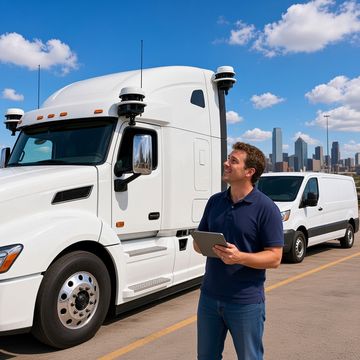
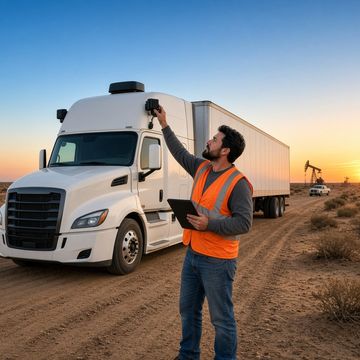
Houston-based Bot Auto has launched a "Capacity Grid" that lets shippers and freight brokers reserve driverless truck capacity in advance, along with agreements covering 200 million miles of autonomous freight, Robotics and Automation News reported.
Get Big Rig Daily every morning
The trucking stories drivers are talking about, in one short email. Unsubscribe any time.
After you sign up, check your inbox for an email from news@bigrigdaily.com and tap the button to confirm.
Quick answer
The Capacity Grid sells autonomous freight transportation by the mile, letting customers book capacity on specific routes and time windows at agreed prices. Bot Auto owns and operates its own trucks rather than selling driving systems to fleets. The agreements include 50 million miles for FreightVana, a Phoenix-based power-only logistics company. Bot Auto has not said how long it will take to run the full 200 million miles.
Key facts
- Company: Bot Auto, based in Houston
- Product: Capacity Grid, booking driverless truck capacity by route, schedule and price
- Agreements: 200 million miles in total
- Largest named deal: 50 million miles for FreightVana, a Phoenix power-only company
- Timetable for the 200 million miles: not specified
- April 29 run: 231 miles from northeast Houston to Hutchins, near Dallas, with no human in the cab
- Company cost figures: $1.89 a mile driverless versus $3.78 a mile for a comparable operation with a driver
How the Capacity Grid works
Instead of treating each driverless truck as a standalone vehicle, the system coordinates trucks, routes, schedules and trailer pools to meet demand that customers reserve ahead of time. Bot Auto says that should raise truck use and lower operating costs while giving customers more predictable planning. Customers do not have to buy, maintain or manage the trucks.
Get Big Rig Daily every morning
The trucking stories drivers are talking about, in one short email. Unsubscribe any time.
After you sign up, check your inbox for an email from news@bigrigdaily.com and tap the button to confirm.
The FreightVana deal
In power-only freight, the carrier supplies the truck and the customer or logistics provider supplies the trailer. "Fifty million miles is a strong place to start," said Brett Suma, president and COO of Bot Auto, adding that a committed trailer pool paired with the company's trucks improves the economics on both sides.
The April run and the cost claims
On April 29, a Bot Auto truck hauled a commercial load 231 miles from northeast Houston to Hutchins for broker Ryan Transportation, leaving at 1:16 a.m. and arriving at 4:57 a.m., with no driver or in-cab observer. The company reported a cost of $1.89 a mile, against $3.78 a mile for a comparable operation with a driver, and revenue equal to $2.70 a mile. Those are company figures for one trip and do not by themselves show that a larger fleet would be profitable once truck investment, maintenance, insurance and oversight are counted. At the time of the April run, Bot Auto was running 12 trucks on two commercial routes. For a wider look at cost projections, see Big Rig Daily's report on driverless truck cost parity.
Would reserved driverless capacity change how brokers book freight on Texas lanes?
Save this story for later

Sources
Get Big Rig Daily every morning
The trucking stories drivers are talking about, in one short email. Unsubscribe any time.
After you sign up, check your inbox for an email from news@bigrigdaily.com and tap the button to confirm.
Related stories