What the New Gainesville Inland Port Means for Truckers: Georgia Expects 26,000 Containers to Shift From Trucks to Rail in Year One

Georgia has formally opened a new inland port aimed at moving shipping containers off the roads and onto rails. Gov. Brian Kemp and Georgia Ports Authority (GPA) officials held a grand opening for the $134 million Gainesville Inland Port on Oct. 29, according to FreightWaves and CDL Life, which reported on it Oct. 30. The terminal began operating May 4.
Get Big Rig Daily every morning
The trucking stories drivers are talking about, in one short email. Unsubscribe any time.
After you sign up, check your inbox for an email from news@bigrigdaily.com and tap the button to confirm.
What it does
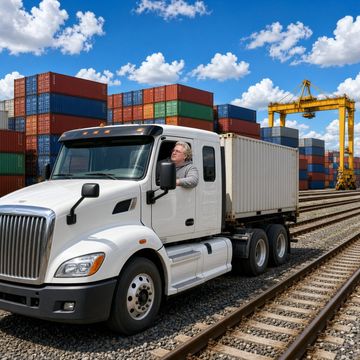
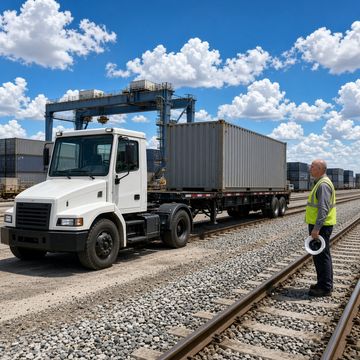
The facility provides direct Norfolk Southern rail service between Gainesville and the Port of Savannah five days a week. That gives businesses in Northeast Georgia an alternative to the roughly 600 mile round trip by truck, FreightWaves reported. The terminal serves a region with more than 330 manufacturers, including poultry, heavy equipment and forest products businesses, and its rail link gives shippers access to Savannah's approximately 40 weekly vessel calls.
The GPA said customers can now choose rail for greater affordability and for heavier loads, or truck only for faster transit.
Get Big Rig Daily every morning
The trucking stories drivers are talking about, in one short email. Unsubscribe any time.
After you sign up, check your inbox for an email from news@bigrigdaily.com and tap the button to confirm.
The numbers
- Cost: $134 million.
- Size: 104 acres, formerly known as the Blue Ridge Connector.
- Capacity: 200,000 containers a year at full build out.
- Access: Interstates 85 and 985.
- Year one goal: 26,000 containers shifted to rail.
- Road work: the GPA also funded $4.8 million in surrounding road improvements, including rerouting an access road, eliminating an at-grade rail crossing and resurfacing another road.
FreightWaves noted that the agency has not disclosed volume at Gainesville since it opened, so the 26,000 figure is an expectation, not a result.
What officials said
"Georgia's ports are a major reason companies choose to invest and create jobs here, and the Gainesville Inland Port brings that advantage directly to Northeast Georgia," Kemp said. "Connecting this region to the Port of Savannah with new supply chain options makes it easier for Georgia businesses to reach customers around the world and helps ease congestion on our highways."
The GPA said it expects to shift 26,000 containers to rail in the terminal's first year of operation, "improving emissions and reducing trucks on Atlanta and Georgia highways." GPA Chairman Alec Poitevint thanked Kemp, the General Assembly and the Georgia Department of Transportation for keeping the state's logistics network strong.
A growing list of inland hubs
FreightWaves described Gainesville as the latest inland hub serving a major East Coast port. Georgia Ports also operates the Appalachian Regional Port serving Savannah. South Carolina's inland ports at Greer and Dillon handle boxes from the Port of Charleston, and Virginia and North Carolina have inland ports of their own.
What it means for truckers
Truckers and carriers will still move containers to and from the terminal and the shippers around it, but the longest leg of some trips will go by rail instead. Neither source said how many truck jobs or loads that could affect. For related coverage, see Big Rig Daily's story on railroads winning truck freight as diesel climbs.
Quick facts
- Grand opening: Oct. 29, 2026, in Gainesville, Georgia.
- Rail partner: Norfolk Southern, five days a week to Savannah.
- Year one expectation: 26,000 containers moved to rail.
- Full build out: 200,000 containers a year.
A question for readers
Is moving freight to rail good news for truckers stuck in Atlanta traffic, or bad news for the ones who used to haul those boxes?
Save this story for later

Sources
Get Big Rig Daily every morning
The trucking stories drivers are talking about, in one short email. Unsubscribe any time.
After you sign up, check your inbox for an email from news@bigrigdaily.com and tap the button to confirm.
Related stories