Railroads Say High Diesel Is Moving Freight Off Trucks, and CSX Is Recruiting Drayage Truck Drivers

Railroads say the trucking squeeze is their opening. On third-quarter earnings calls last week, CSX and Union Pacific described high diesel prices and tight truck capacity as tailwinds for their intermodal business, and CSX said it is also looking to hire more drayage truck drivers, according to CDLLife and Land Line. The calls took place Oct. 21 and Oct. 22, and trucking outlets reported on them Oct. 27.
Get Big Rig Daily every morning
The trucking stories drivers are talking about, in one short email. Unsubscribe any time.
After you sign up, check your inbox for an email from news@bigrigdaily.com and tap the button to confirm.
What CSX said
"Reduced trucking availability, high truck rates and elevated diesel costs continue to benefit our intermodal segment," said Maryclare Kenney, CSX's senior vice president and chief commercial officer. "Conversions from the highway remains strong."
CSX runs a national accounts program in which a team looks confidentially at a shipper's truckload file and shows where lanes could move by intermodal instead, Kenney said, according to CDLLife.
Get Big Rig Daily every morning
The trucking stories drivers are talking about, in one short email. Unsubscribe any time.
After you sign up, check your inbox for an email from news@bigrigdaily.com and tap the button to confirm.
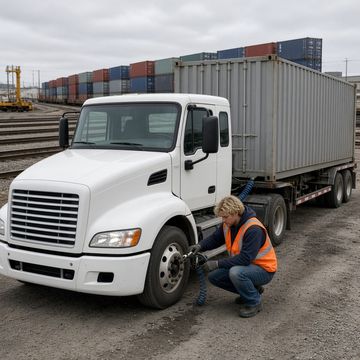
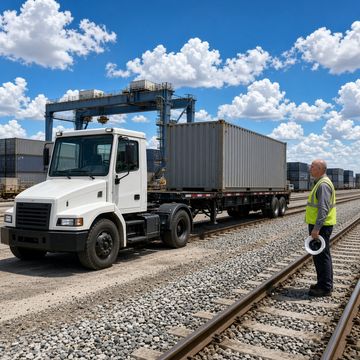
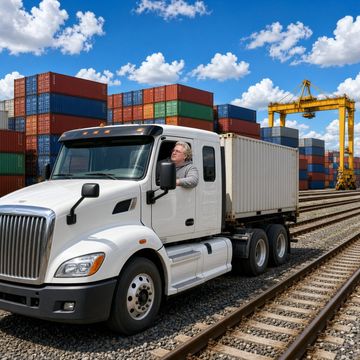
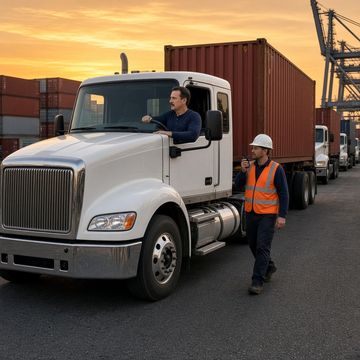
On trucking labor, Kenney said the company is focused on drayage, the short haul to and from the rail yard. CSX employs some truck drivers for that work and is recruiting more. "The benefit on the drayage side is it's a more efficient move. You can make more turns in a given day," she said.
What Union Pacific said
Union Pacific CEO Jim Vena said on the Oct. 22 call, "It costs us way less per ton to move products across the U.S. So, when fuel prices go up, it's naturally an advantage," Land Line reported.
The numbers
Intermodal is where railroads are seeing the largest increase in shipments, Land Line reported. Union Pacific reported a 13% increase in domestic intermodal volume, CSX 7% and Norfolk Southern 3%. Union Pacific, Norfolk Southern and CSX all reported higher third-quarter profit and revenue.
Rails are not shielded from fuel costs. Union Pacific said its operating ratio was hurt, and Norfolk Southern estimated that about half of its year-over-year expense increase was tied to fuel. C.H. Robinson noted the widening gap between truckload and intermodal pricing as one of the year's biggest trends, and said railcar shortages in some places could mean longer lead times.
What it means for trucking
CDLLife noted this is not the first time a railroad has tried to pull freight from the highway: last year Union Pacific announced plans to become "truck competitive" with an intermodal service from Chicago to Southern California.
Quick facts
- CSX call: Oct. 21; Union Pacific call: Oct. 22.
- Domestic intermodal volume: Union Pacific up 13%, CSX up 7%, Norfolk Southern up 3%.
- CSX program: confidential review of shippers' truckload files for conversion to rail.
Big Rig Daily has also covered how contract rates reset 13% higher and what higher diesel costs a truck each day. To see how fuel affects your own margins, use the owner-operator profit calculator.
A question for readers
If more long-haul freight moves to rail, would you shift toward drayage and regional work?
Save this story for later

Sources
Get Big Rig Daily every morning
The trucking stories drivers are talking about, in one short email. Unsubscribe any time.
After you sign up, check your inbox for an email from news@bigrigdaily.com and tap the button to confirm.
Related stories