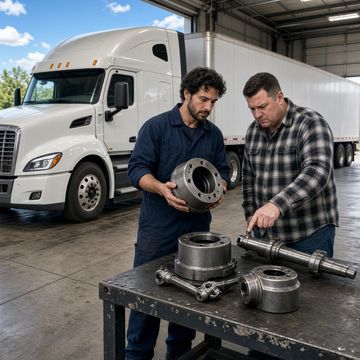
New Aerodynamics Report Says Stripping the Aero Off a Modern Truck Costs About 10% in Fuel Economy, a Point Truckers Feel at the Pump

A new fuel efficiency report says the old idea that the industry was "done with aero" is wrong, which is a timely point with diesel at record prices. The North American Council for Freight Efficiency (NACFE), based in Fort Wayne, Indiana, published "An In-depth Look at Tractor & Trailer Aerodynamics," and The Trucker reported on it Oct. 30.
Get Big Rig Daily every morning
The trucking stories drivers are talking about, in one short email. Unsubscribe any time.
After you sign up, check your inbox for an email from news@bigrigdaily.com and tap the button to confirm.
What the report found
NACFE said the persistent view that "we were done with aero 10 years ago" is wrong, as it discovered while researching the report. The report now looks at the tractor and trailer together, as a system, and combines what used to be two separate confidence reports into one.
"Our second report on aerodynamics in 2020 told fleets that good aero was worth doing," said Mike Roeth, NACFE's executive director. "Six years of data did not change that conclusion. It strengthened it. What changed is that the devices got more durable and the business case got better."
Get Big Rig Daily every morning
The trucking stories drivers are talking about, in one short email. Unsubscribe any time.
After you sign up, check your inbox for an email from news@bigrigdaily.com and tap the button to confirm.
Dean Bushey, NACFE's director of programs, said: "The report found that aerodynamic technology is both proven and under-adopted. One thing we do know is that aerodynamics is not a finished subject. There is more to come."
The 10% number
The headline advice is to start with the manufacturer's aerodynamic base model. According to the report, stripping the aerodynamic features off an aerodynamic base model costs about 10% in fuel economy, and the base model costs almost nothing over a non-aero spec. For natural gas trucks, the report says to spec from the top of the aerodynamic menu to offset that penalty. It also recommends layering day cab aerodynamics onto regional tractors, where it says the benefit is real and still underused.
What to add first
For dry vans and refrigerated vans, NACFE's order is:
- Skirts first.
- Manage the tractor and trailer gap second.
- Rear devices last, and only after confirming a maintenance plan and the fleet's exposure to dock and yard damage.
On weight sensitive trailers, added aerodynamic hardware competes with paying payload, so a device that pays off on a van can cost a bulk hauler money. Those fleets should start with aerodynamic mud flaps, then look at underbody treatments suited to the trailer's shape.
What else is in the report
On the tractor side, the report covers aero sleepers, partial aero sleepers, classic sleepers, aero day cabs and classic day cabs. On the trailer side, it covers side skirts, rear devices, underbody and wheel devices, nose cones and front fairings, and combination systems. It also covers adoption patterns, economics, the policy landscape, and aerodynamics for diesel, compressed natural gas and zero emission trucks. It includes confidence ratings based on how fast a technology pays back and how sure the data makes NACFE of that payback.
Why it matters at the pump
The 10% figure comes from the report, and The Trucker did not give a dollar estimate. Big Rig Daily has reported that diesel is up 69% in a year and that one analyst expects diesel to stay high until spring. The report can be downloaded from NACFE.
Quick facts
- Report: "An In-depth Look at Tractor & Trailer Aerodynamics," from NACFE.
- Finding: stripping aero from an aero base model costs about 10% in fuel economy.
- Vans: skirts first, gap second, rear devices last.
- Weight sensitive trailers: start with aero mud flaps.
A question for readers
Old school long hood or slick aero cab: which would you rather drive, even if it costs you at the pump?
Save this story for later

Sources
Get Big Rig Daily every morning
The trucking stories drivers are talking about, in one short email. Unsubscribe any time.
After you sign up, check your inbox for an email from news@bigrigdaily.com and tap the button to confirm.
Related stories