Florida Trucking Association CEO Says Fuel Now Costs More Than Truck Driver Pay at Some Fleets, as the State Moves Ahead With 922 More Parking Spaces

Fuel has become a bigger bill than truck driver pay for some Florida fleets, according to the head of the state's trucking association. Florida Trucking Association CEO Scott Perry made the comments in an interview with FreightWaves at the WEX OTR Summit in Jacksonville. He also talked about a plan to add 922 truck parking spaces in the state.
Get Big Rig Daily every morning
The trucking stories drivers are talking about, in one short email. Unsubscribe any time.
After you sign up, check your inbox for an email from news@bigrigdaily.com and tap the button to confirm.
Fuel passes pay
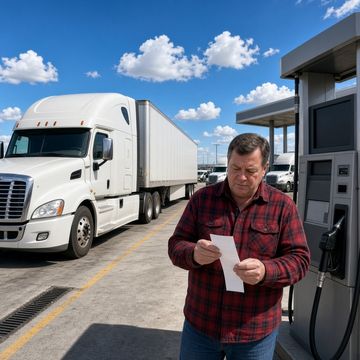
"Traditionally, driver pay was the number one line item on the P&L," Perry said. "Fuel has surpassed that in many instances, and it's extremely challenging for them to absorb that if they don't have good fuel charge mechanisms or recapture ability with their customers."
He cited a roughly 70% year over year increase in fuel costs and said carriers without good fuel surcharge arrangements are especially vulnerable. Perry said he was unaware of any Florida Trucking Association members that had closed or laid off workers specifically because of the recent fuel increases.
Get Big Rig Daily every morning
The trucking stories drivers are talking about, in one short email. Unsubscribe any time.
After you sign up, check your inbox for an email from news@bigrigdaily.com and tap the button to confirm.
He said insurance costs, equipment costs and wages are adding to the pressure. "All of that combined adds up to generally a negative margin business that can't be sustained forever," Perry said.
Rates and shippers
Perry said Florida carriers are somewhat more optimistic about freight rates heading into 2027 as trucking capacity tightens. He said much of that change is coming from fewer available trucks, not a big rise in freight demand, with capacity being taken out of the market.
He also said some shippers have attempted to reverse the substantial rate increases granted during the COVID-19 pandemic. "We've seen insurance costs go up substantially. Diesel rates are up substantially. Labor rates are up substantially," he said. "Those don't align with the depressing rates back to pre-COVID era. It just doesn't."
Florida adds truck parking
On parking, Perry said Florida began 2026 with about 2,100 public access truck parking spaces. The state is moving forward with a four phase project to add 922 more, mostly along the Interstate 4 corridor between Tampa and Orlando. A groundbreaking ceremony took place in July.
"Will 3,000 public access parking spaces serve the entire need for the industry? No, it won't," Perry said. "Is this a significant step in the right direction? It absolutely is."
He said the shortage can force truckers to choose between following hours of service rules and stopping in potentially unsafe places, including highway shoulders and exit ramps.
Quick facts
- Who: Scott Perry, CEO of the Florida Trucking Association.
- Fuel: costs up roughly 70% from a year ago, he said.
- Parking: about 2,100 public access spaces at the start of 2026, with 922 more planned in four phases.
- Where: mostly along I-4 between Tampa and Orlando, with groundbreaking in July.
- Closures: Perry said he knew of no association members that had closed or laid off workers because of the recent fuel increases.
Big Rig Daily has also covered a truck stop network CEO's view that diesel will stay high until spring and 221 trucking company bankruptcies so far in 2026. For tips on finding a spot, read the guide to truck parking tips and apps.
A question for readers
Which is squeezing Florida truckers harder right now, the price of diesel or the hunt for a place to park?
Save this story for later

Sources
Get Big Rig Daily every morning
The trucking stories drivers are talking about, in one short email. Unsubscribe any time.
After you sign up, check your inbox for an email from news@bigrigdaily.com and tap the button to confirm.
Related stories